


Design on Credit
The PM walks into the sprint meeting with a screen that works and moves. Looks like there was some late-night vibecoding. The room nods, the decision is rubber-stamped, and design is handed the chore: "make it look pretty for production." Sound familiar?

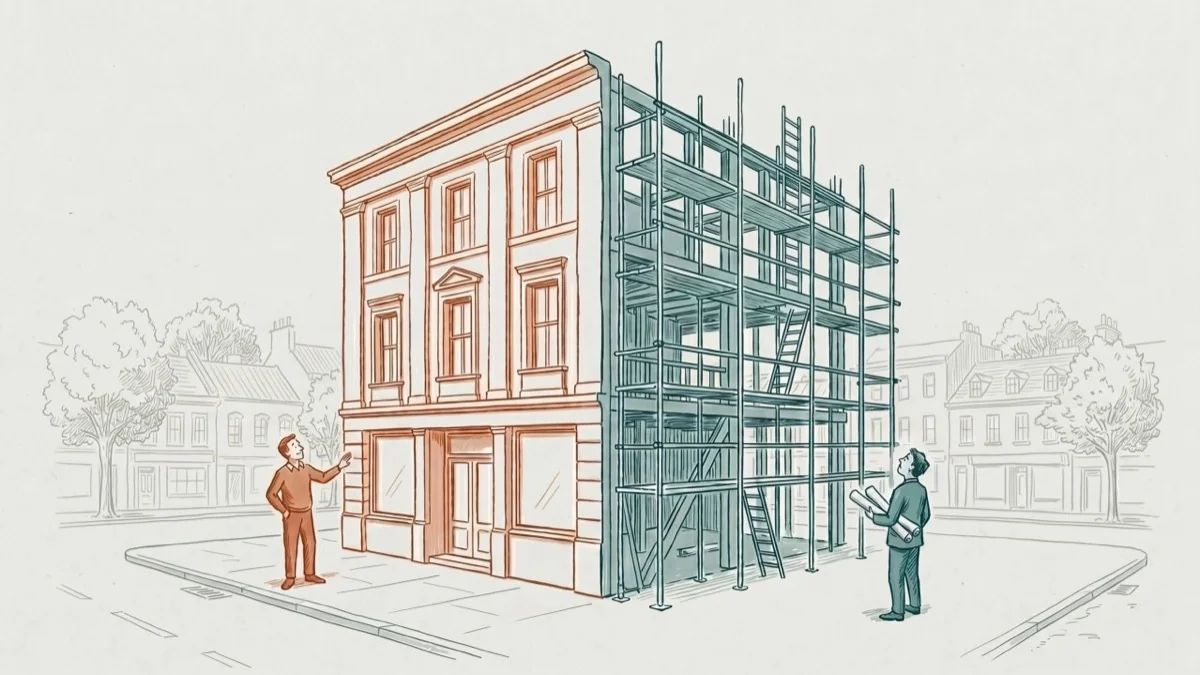
What has changed isn't that AI designs. It's that demonstrating what you want now costs virtually nothing.
The friction we used to have was precisely what forced teams to debate an idea thoroughly before committing it to pixels. Without that friction, describing "what I like" gets confused with having actually designed it.
And they are not the same thing.
A Product Manager who says "this is what I want" points in a direction, and that's genuinely valuable. They often understand customer pain points deeply and are targeting a legitimate need. But identifying the need is the starting point of design, never its substitute.
The Invoice Arrives Later
When a pre-baked screen lands on the table, almost everything invisible in a live demo remains completely unresolved:
- How does this fit into the broader information architecture?
- What happens the second you leave the happy path?
- Error states, edge cases, latency, and empty states.
- Permissions, accessibility standards, and the anomalous edge case QA never anticipated.
That is where a real digital product spends half its operational life. None of those hard realities evaporate just because an interactive demo animates smoothly on a laptop.
Postponing those decisions is extraordinarily expensive. Redesigning a screen that has already been showcased and celebrated isn't a minor polish pass, it's unraveling commitments in front of an audience. Stakeholder expectations have crystallized, and steering away from that illusion is an uphill battle.
The vibecoded screen looks free upfront. But every skipped architectural decision is racking up compounding interest in the background, and you eventually pay the invoice, just like that forgotten credit card statement that sneaks up at the end of the month.
"The vibecoded screen appears free, but skipped decisions accumulate compound interest. In design, the invoice always arrives."
Not Aesthetic Taste, but Responsibility
This might sound like discouraging news for designers, but it's actually the opposite. The lazy defense would be claiming that designers will always possess superior "taste" that machines lack. But generative AI creates outputs that look increasingly plausible, and designers will have to share that aesthetic space.
What cannot be shared is responsibility.
A PM who vibecodes makes a gesture; they propose and provoke. What they do not do is assume accountability for how that system behaves when things go wrong in production.
And that accountability isn't an optional add-on to product design: it is the job.
Shifting the Timing
Personally, I find vibecoding extraordinarily useful as an exploratory tool. It allows rapid prototyping, unlocks quick experiments, and aligns teams around concrete artifacts rather than abstract slide decks.
The hazard of the vibecoded screen is not that it exists; it's that it arrives at the decision table before anyone has done the rigorous design work, yet is presented as though the thinking were already complete.
What needs to shift is our timing. We must be in the room before the screen is showcased, not summoned afterward to clean up the fallout.
We aren't being designed out of the process; we're just being brought in too late. And that is a problem we can fix.